


They say a picture is worth a thousand words. The incidental details that may not be noticed by one viewer can become the most powerful details that another viewer uses as context for the story. We all have the choice to look at a picture for a fraction of a second or to begin asking ourselves questions that invite us to become investigators, turning the experience of simply looking at a photograph into an act of storytelling. What happened before this moment? Who or what are the subjects of this photograph, and why are they together? What feeling is represented? What did the photographer or artist see or think that made them capture this? The story develops as we move from what was captured intentionally to what the viewer chooses to see. I’ve gathered several images that have come to mean something to me after practicing this kind of investigation. Here are the stories they tell…
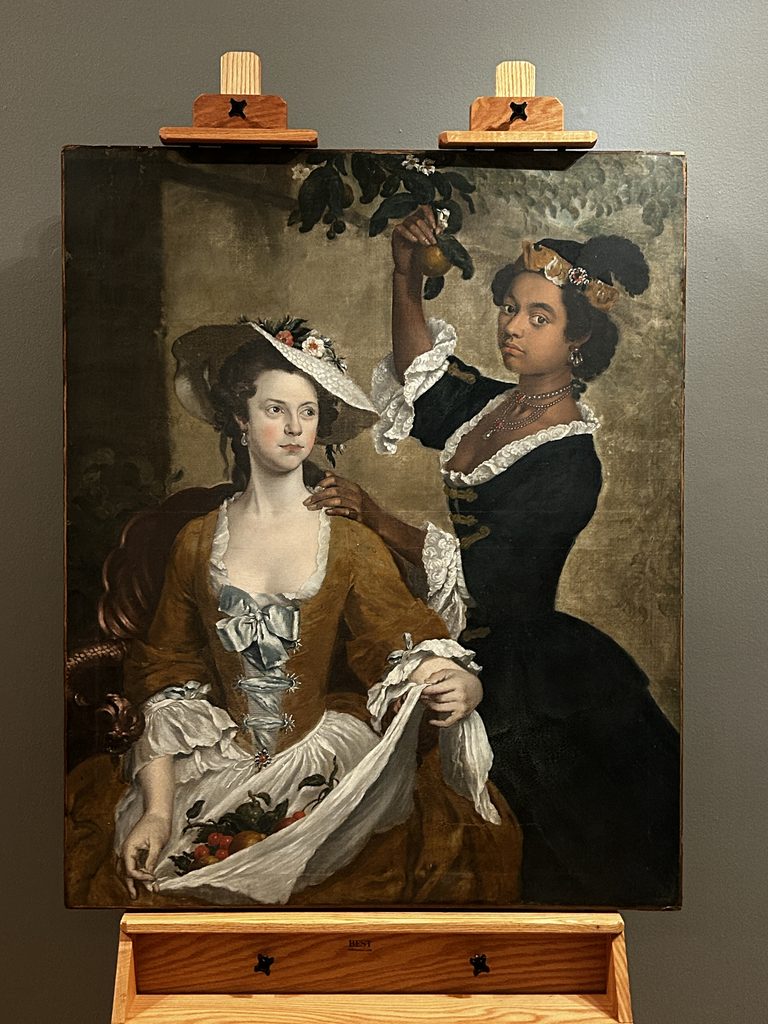
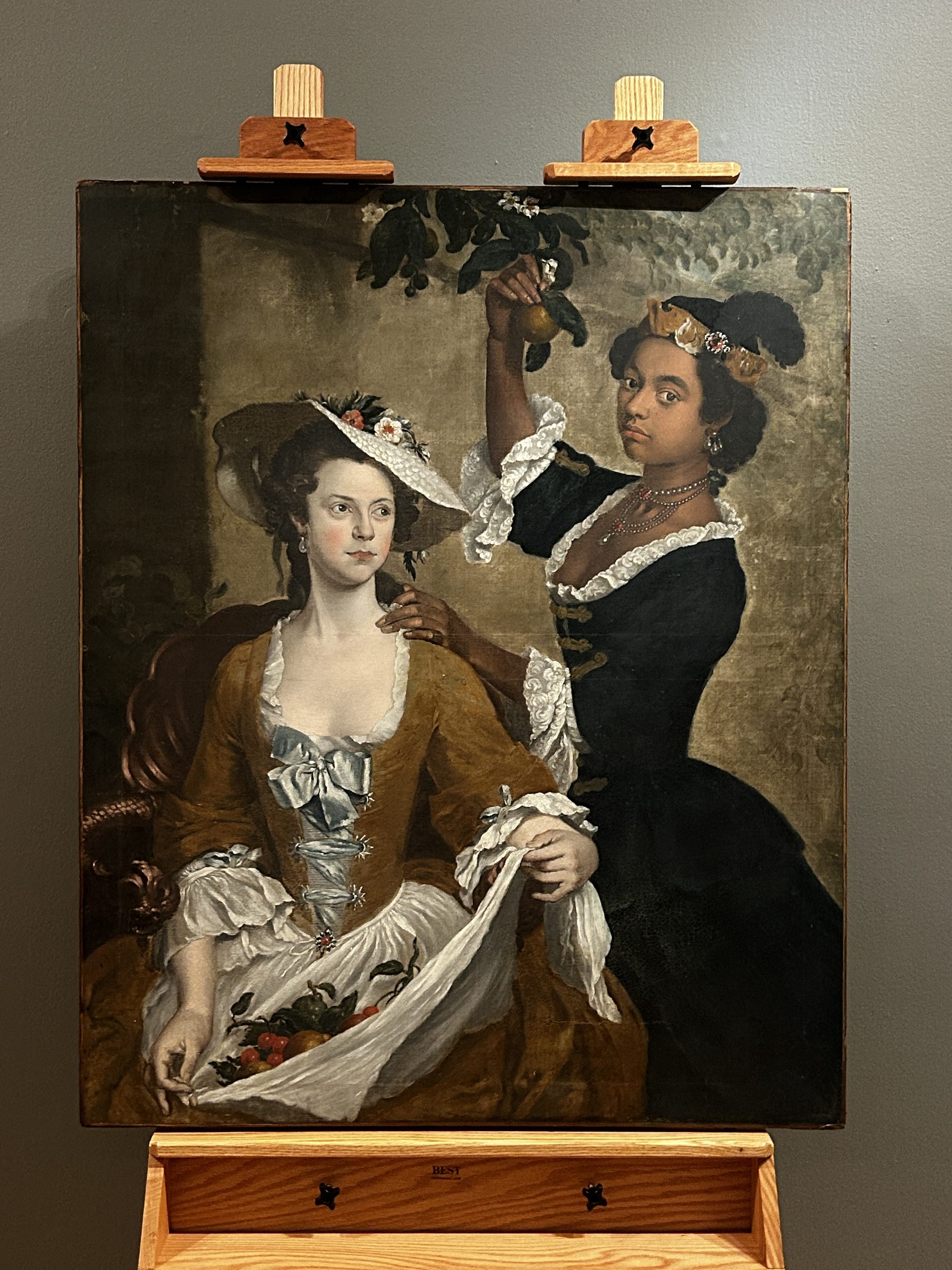
I remember being in the Wadsworth Atheneum Museum in Hartford, Connecticut and lingering over this painting much longer than the rest. My immediate thought was, “What’s the story here?” Rarely do we see 18th-century gentlewomen of different backgrounds portrayed without the obvious boundaries of class and race that we might expect. The painting is titled “A Young Woman with Her Servant,” or alternatively, “Two Women Gathering Fruit,” by Stephen Slaughter. At first glance, it was unclear to me who was the “young woman” and who was the “servant.” The seated woman looks away while the standing woman holds her gaze at the viewer, which was my first suggestion that the standing woman might be the young woman. Her hand resting on the seated woman’s shoulder could be interpreted as a gesture of friendship (suggesting a degree of social equality) or as an assertion of dominance if she is intentionally positioning herself above the seated woman. The jewelry also grabbed my attention because the standing woman wears an ornate necklace while the seated woman’s neck is bare. The seated woman also holds the fruit, the product of their labor, while the standing woman picks it. These details create a sense of tension between intimacy and hierarchy. Another thing to note is the seated woman’s serpent-shaped chair, which made me think of the snake in the biblical Garden of Eden and raised the possibility of deception or hidden knowledge. Perhaps the painting is not simply about Black and white, or even about the history of enslavement as we understand it today. Maybe it is instead a metaphor for an internal power struggle or an invitation for viewers to question the societal roles and assumptions they have been taught to accept. What makes the painting so compelling to me is that it does not seem to offer a single, definitive story. It leaves enough ambiguity for the viewer to feel welcome in creating one and walk away with the interpretation that resonates most deeply with them.
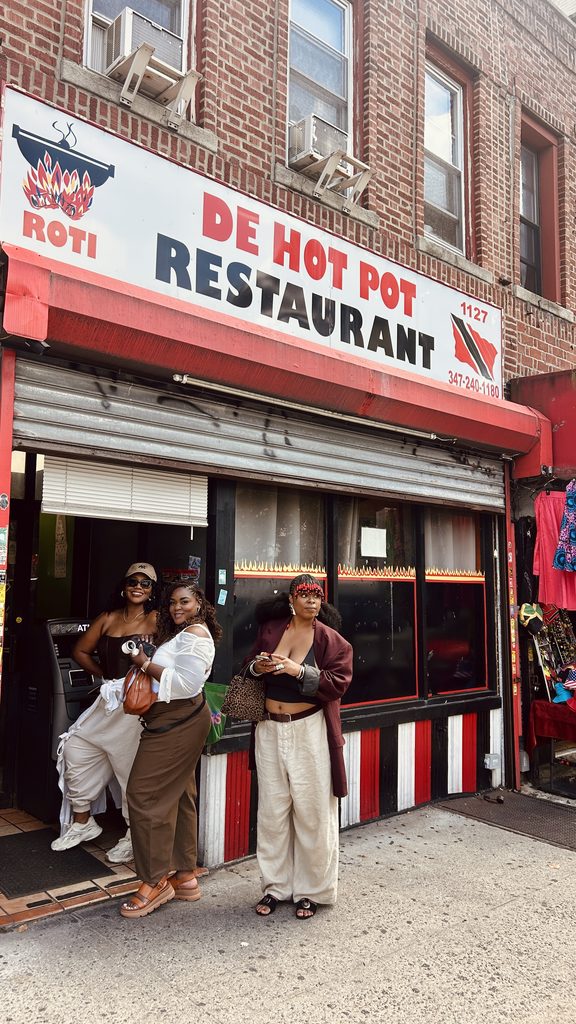
There’s just something about an unplanned photo of the girls that’s always going to do it for me. I love this one I took of my sister and some girlfriends. I noticed that they had unintentionally coordinated with the restaurant. The reds, browns, creams, and black woven throughout their outfits almost felt like an extension of the building, and I wanted to preserve it. You can also get a sense of the city from the setting: the restaurant sits beneath an apartment building, making use of the space in a way that feels urban. Beyond the setting, this photo feels like a little time capsule. It speaks to their personal styles at that moment, the energy of the afternoon, and the ease of being together. Personally, it’s a representation of girlhood, community, friendship, and the little moments that become memories merely because someone thought to photograph them.
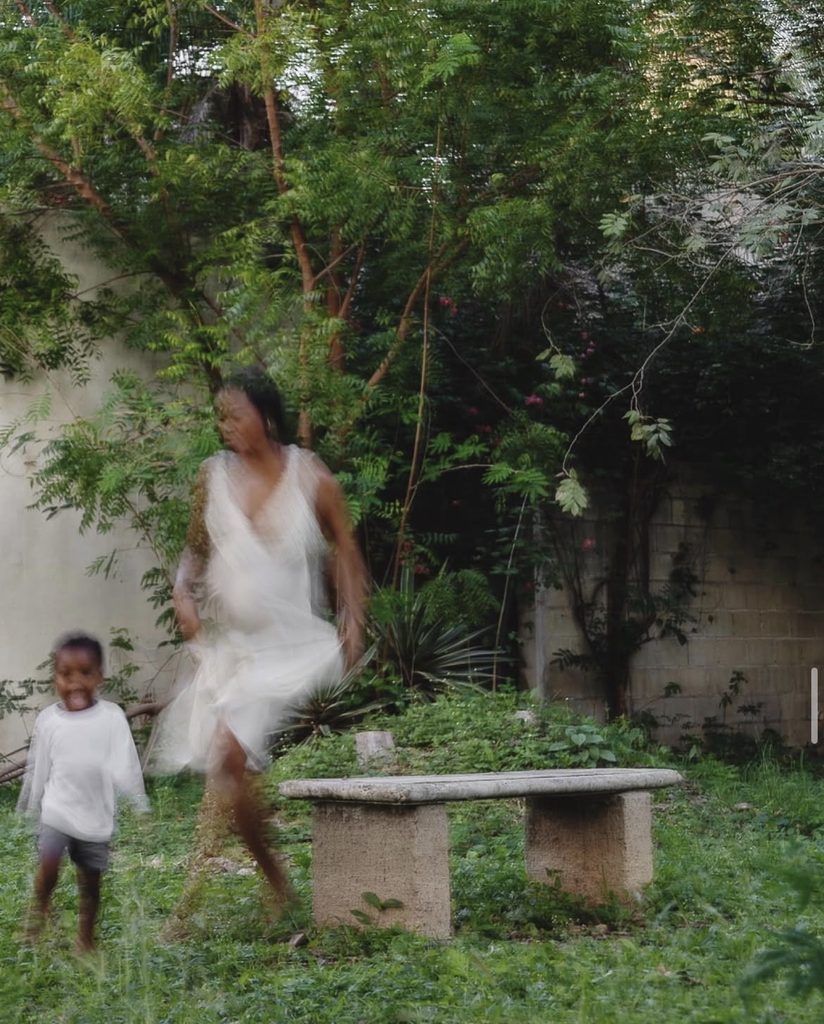
I was eight months pregnant, contemplating how much life would change with the arrival of my second child. Knowing that my time alone with my son was about to shift, I wanted to capture as many moments with him as I could. I had heard that the memories between your first and second child can blur, and I wanted to hold onto this particular season for us. What began as a posed shoot quickly turned into play. Somewhere along the way, we both forgot the camera was there, and that’s when this photograph was born.
It’s out of focus, but somehow that feels right. When I look at it, I don’t see a traditionally perfect photograph, but I see his joy, and I see myself following his lead as he runs through the grass. We’re barefoot, surrounded by nature and completely unguarded. There is something about that moment that feels grounding, even as I look at it today. I love that it portrays my being more childlike. We see that he likes to run, play, and be present while I’m following his lead. The pith of that truth is captured in this photograph. We’re both dressed in white, which makes the image feel almost weightless, which feels like a subtle contrast to the heaviness of my pregnant body. Here there is only movement, joy, and the lightness of being his mother.
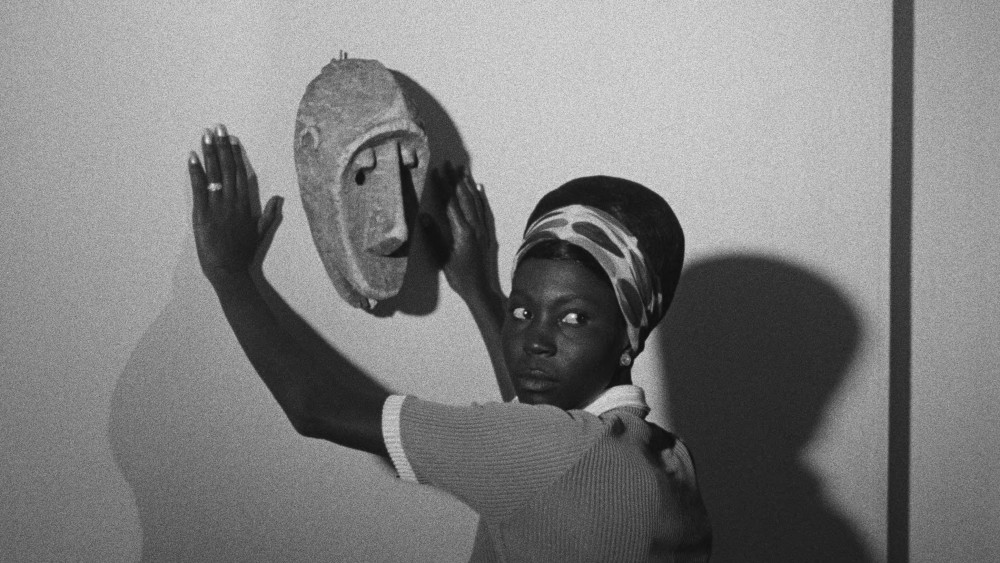
La Noire de… is a 1966 film written and directed by Senegalese filmmaker Ousmane Sembène. I honestly could’ve chosen any snapshot from this film to write about because it was so visually captivating that I watched it without subtitles while exercising my limited understanding of French. In this still, Diouana is mid-monologue, detailing the difference between her life in Dakar and her life in France as a maid for the French couple who recruited her. Living in France feels like living in a cage, far from the picture of life that was painted for her before she made the move. The mask that the couple hangs as decor is a constant reminder of the life she mourns and the home she thought she was leaving behind for something better. Here, she hovers over the mask almost as if she were protecting it, or protecting Dakar, from the strangers who now possess something special to her. Her body language seems to be creating a barrier around the mask as a result of what she’s come to know. The scowl she casts over her shoulder feels like disapproval or even resentment for turning a piece of her home into decoration in theirs. Even her shadow cast behind her feels significant to me. It occupies the space in the frame, which visually gives the sense of confinement (her personal cage).
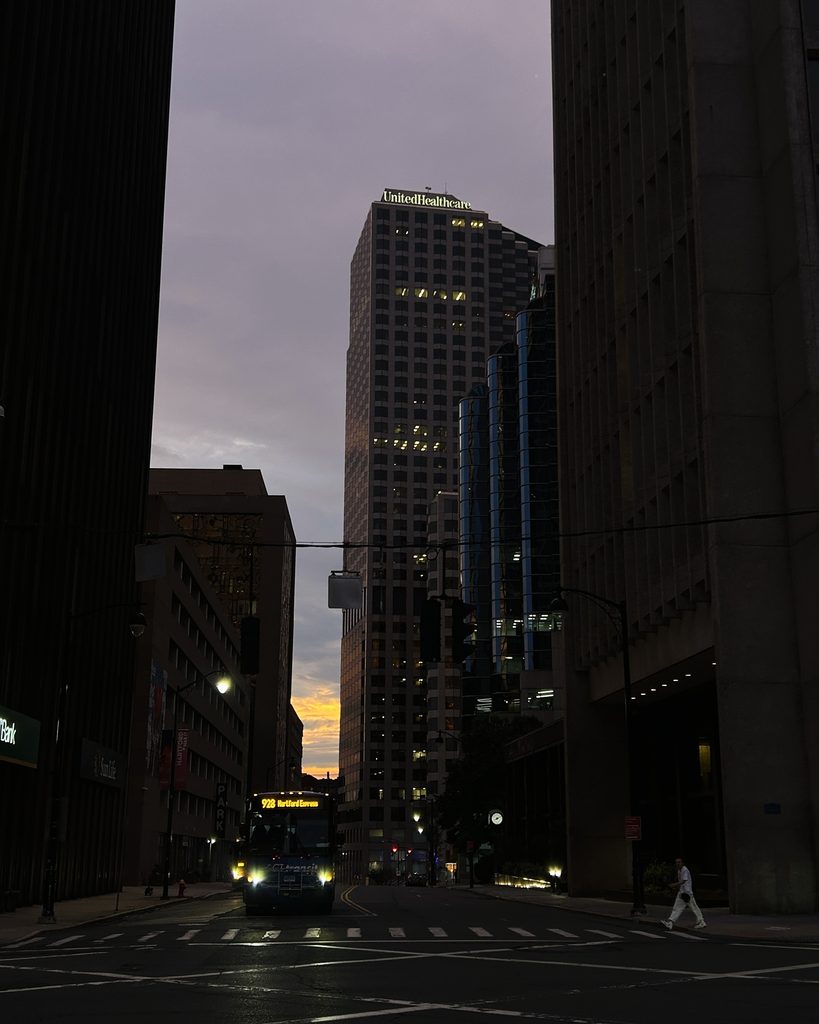
This next one is a shot I snapped while walking home from the gym one evening. The scene appealed to me because it captured the feeling of evening walks in the city. I love the lighting. Without any context, I’d assume it was taken either very early in the morning or sometime after 5 pm, simply because there isn’t much of a crowd. But if I had to decide, I’d go with the evening. The only man we see in the frame is dressed in an all-white, more casual look, which gives me the feeling of freedom at the end of a workday. He also notices me as I notice him. If he were heading to work, I imagine him being in a uniform or slacks with his head down on his device, preparing for the day ahead, or perhaps carrying a coffee and something to read. Instead, there’s something unhurried about him as he crosses the street with a stride. The darkness of the photograph feels like a closing, as if the city is winding down while the bus makes its last stops for the day.
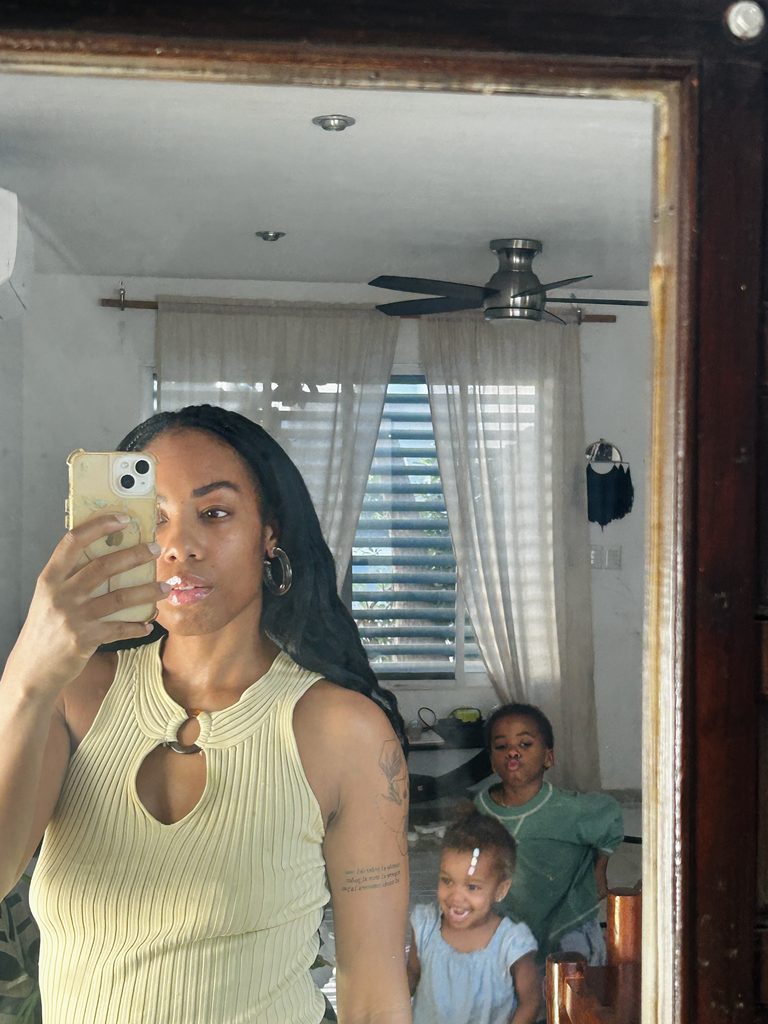
I look at this selfie and smile at how much it represents early motherhood. The story I see when I look at it and also experience is that of a mother who has finally managed to take a moment for herself in the midst of all the chaos. I took the selfie because I felt cute in my bright top and lip gloss, but the clues of motherhood were captured too. My kids playing just a few steps behind me speak to how rarely I get personal space and how in toddlerhood, they’re perfectly happy simply being near me. The clutter beneath the window feels like another reminder that life doesn’t pause just because I do. There is always something to clean, organize, or get done, and somehow the list never seems to get finished in a manner that feels timely. I smile because I know most new moms have a photo with a story like this in their camera roll. It feels like something other mothers might recognize in themselves, or at least that’s the story I tell myself.
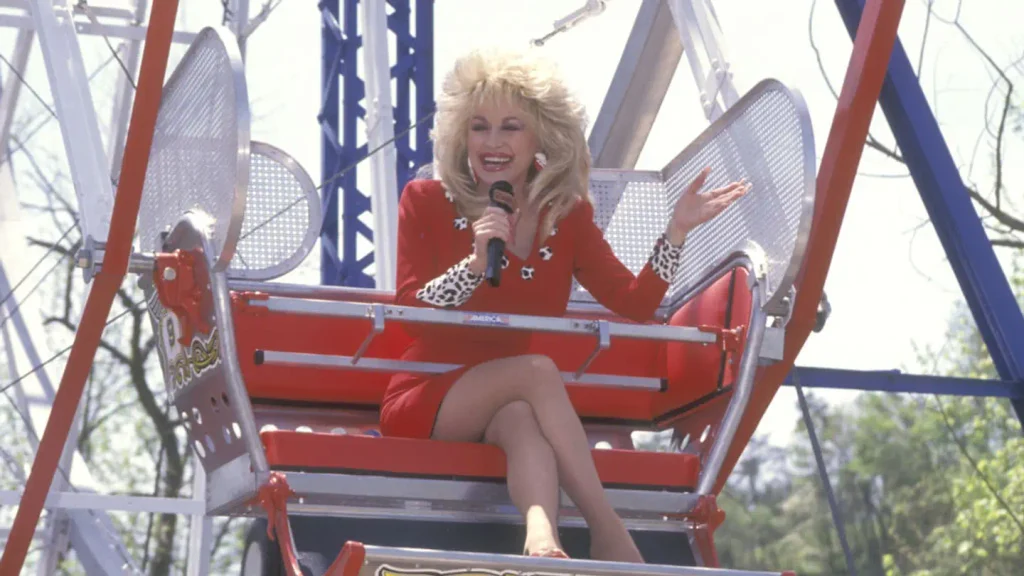
Last but not least, the one and only Dolly Parton. May she rest in eternal peace. I wanted to include her on this list because her passing has had me deep in the Jolene Spotify playlist. In this case, the narrative begins with context. This photograph was taken during opening weekend at Dollywood, a 160-acre theme park in Pigeon Forge, Tennessee. To me, the photograph captures Dolly’s essence beautifully. Her hair is unmistakably Dolly, reaching toward the heavens, while her smile and friendly wave convey the warmth and regal presence she carried throughout her career. The colors of her outfit, paired with the ride she sits on, evoke an All-American spirit in red, white, and blue. Even the perspective of the photograph, with Dolly’s gaze from above, seems to communicate her larger-than-life stature while remaining warm and inviting. Every detail works together to tell the story of who she is and what she represents.
When reflecting on these images, I realize that there isn’t one formula for developing the story beyond the frame. That exploration is why two people can look at the same image and develop completely different stories. We bring our own interests, backgrounds, knowledge, and experiences to turn a single image into what may take a thousand words to explain. A good story can be told without any actual words at all. Sometimes, it is created within us through the feelings an image evokes.
Asking, “What story do I see when I look at this now?” can offer us as much information about ourselves as it does about the photograph. While we change over time, the images we capture remain the same. They preserve fragments of emotion, atmosphere, relationships, cultural context, and time, allowing us to return to moments we might otherwise have forgotten. But when we return to an image years later, we may discover that the story has changed, not because the photograph has, but because we have. We can wonder why we once held certain perspectives, notice details we hadn’t seen before, or find meaning in something that once seemed insignificant. Surely that experience is the real value of a picture being worth a thousand words; the words are not always contained within the image. Sometimes, we bring them with us.
References
Blot, S. (2023) Mother and her Son [Photograph]
Galella, R. (1993)Dolly Parton attends the opening weekend celebration of Dollywood on April 24, 1993, at the Dollywood in Pigeon Forge, Tennessee [Photograph]. Ron Galella Collection, Getty Images
Slaughter, S (1697-1765). Young woman with servant [Painting]. Wadsworth Atheneum Museum of Art, Hartford, CT.


Inspirational!! Every details you captured in each photo moved me. I hope this is a starter of your Best seller.